Costs and pricing
Part of Budget for short form video costs and pricing with a working model
A short form video budget template explained for marketing teams
A practical guide to building a short form video budget template, covering cost lines, a comparison table and the rules that affect spend in England.
What to take away
- A short form video budget template is a spreadsheet that lists every recurring and one-off cost of producing vertical video, so a team can forecast monthly spend before work starts.
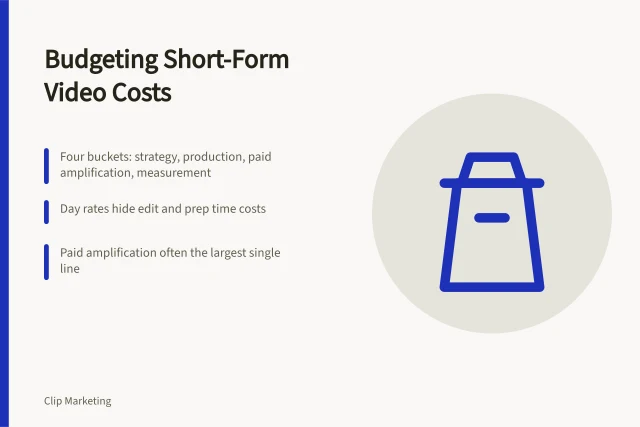
- Most budgets break into five linespeople, production, paid distribution, tools and contingency.
- A template only works if every figure carries a label, a date and an owner.
- England-based teams should check the Companies Act 2006 for reporting duties when agency spend is material.
Why a template beats a single quote
A single supplier quote hides the costs that sit around production. Editing time, captions, music licensing and paid boosting usually fall outside the quote. A template forces those lines into view before anyone signs.
Hidden annual cost example
- £400monthly editing
- £250monthly paid distribution
- £7,800yearly commitment
For example, a team paying £400 a month for editing and £250 a month for paid distribution is committing £7,800 a year, labelled as an illustrative example. That total rarely appears on one invoice.
Internal time is the line most teams leave blank. A producer who spends a day a week on edits is still a real cost, even when no invoice arrives. Estimate those hours and price them at an internal rate.
The five cost lines to include
Five cost lines to include
- Peopleinternal staff and freelancers
- Productionfilming days, locations, equipment
- Paid distributionad spend and boosting
- Toolsscheduling, analytics, stock libraries
- Contingencyreshoots and late changes
Each line needs a monthly figure, a yearly figure and a named owner. Teams that skip the owner tend to leave the contingency line empty, then absorb overruns elsewhere.
Every figure also needs a source label. An invoice, a rate card and a timesheet estimate are all acceptable, as long as the label says which one applies. A number with no source cannot be defended in a budget review.
A comparison table for planning
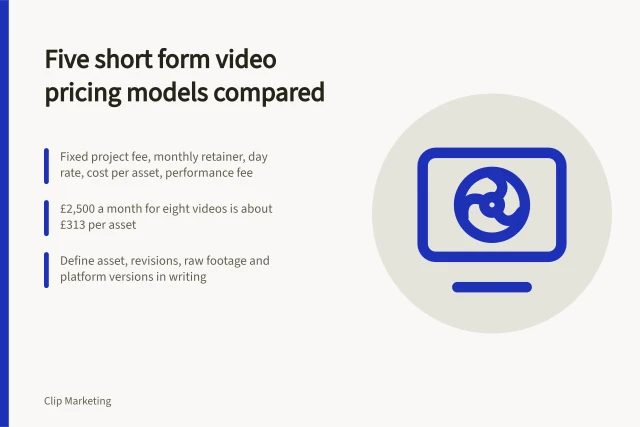
The table below compares three common budget shapes. All figures are illustrative examples in pounds sterling, not market rates.
Monthly cost
- In-house only
- £1,200
- Hybrid, in-house plus freelancer
- £2,500
- Full agency
- £5,000
Yearly cost
- In-house only
- £14,400
- Hybrid, in-house plus freelancer
- £30,000
- Full agency
- £60,000
Best suited to
- In-house only
- Teams with editing skills already
- Hybrid, in-house plus freelancer
- Teams scaling output
- Full agency
- Teams without production capacity
Use the shape that matches your output target, not the one that looks cheapest per video. A low monthly figure with high internal time can cost more once staff hours are counted.
Two suppliers quoting the same scope will leave out different lines. The template shows those gaps, which moves negotiation onto scope rather than headline price.
The wider short form video costs and budget guide for England sets out how these lines behave across a full year, which helps when you set the template's default values.
Checking suppliers before you commit
Due diligence matters when a supplier controls your ad spend. The Advertising Standards Authority publishes a list of non-compliant online advertisers, which is worth checking before a brand or platform is added to the plan.
If a supplier's conduct looks anti-competitive or misleading, you can report a problem to the CMA through its published route. Record the check date in the template so the audit trail stays intact.
Linking spend to return
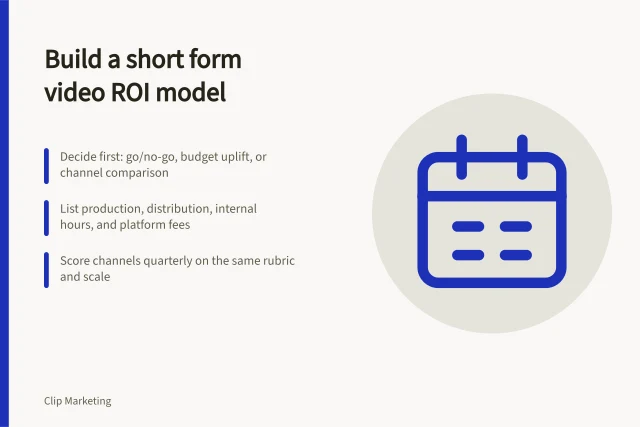
A budget template shows what leaves the account. It does not show what comes back. Pair the template with a return model so each cost line has a matching outcome measure.
The short form video return on investment in England article explains how to attach revenue or pipeline figures to the same lines, which stops the template becoming a static spreadsheet.
Give each outcome measure a review date. A line that produces no measure after two quarters should be cut or reworked.
Common questions
What should a short form video budget template include first?
Start with people and paid distribution, because those two lines usually carry the largest recurring figures. Add production, tools and contingency once the first two are stable.
Should the template use monthly or yearly figures?
Use both. Monthly figures help with cash flow, while yearly figures reveal the true commitment. Show them side by side so neither view hides the other.
How often should the template be updated?
Review it monthly against actual invoices and at least once a year against your output plan. Any line that drifts by more than a tenth of its forecast deserves a note.
Do England-based teams need extra checks?
Company reporting duties and advertising rules apply across the UK, so check them wherever your team sits. Keep evidence of supplier checks with the budget file.