Costs and pricing
Budget for short form video costs and pricing with a working model
A practical guide to short form video costs and pricing, covering rate cards, production budgets, paid amplification and the compliance checks to plan for.
What to take away
- Short form video costs and pricing usually divide into four buckets: strategy and creative, production, paid amplification, and measurement and compliance. Each needs a separate line in your budget.
- Vertical video made for TikTok, Instagram Reels and YouTube Shorts is rarely priced per finished clip alone. Expect day rates, usage terms, editing time and paid media to drive most of the total.
- Rates vary by region and supplier type, so build a labelled illustrative model rather than relying on a single market average. For example, a team paying £400 a month for editing and £1,200 a month for paid ads is working with £1,600 of recurring spend.
- Paid amplification pricing is set by the platform, not the creator, so check the current rate cards before you commit. LinkedIn publishes its own advertising cost guidance.
- Compliance is a cost line too. Disclosure rules for affiliate and influencer content affect how you brief creators and how you record spend.
Why short form video pricing is hard to pin down
Short form video is not one product. A single vertical clip might be a talking-head edit, a product demonstration, a user-generated-style testimonial or a paid ad variant. Each carries different costs and different usage rights.
The pricing problem is that most suppliers quote a package. A monthly retainer may include a set number of clips, a set number of revision rounds and a set amount of paid media management. Once you exceed those limits, the unit price changes.
That makes comparison difficult. Two quotes for ten vertical videos can differ by thousands of pounds because one includes paid usage rights for 12 months and the other does not.
Four variables move a quote more than anything else: volume, turnaround time, the number of people on set, and the length of the usage period. A same-week edit costs more than a two-week edit. A licence for three months costs less than one for two years.
To compare properly, you need a model that separates the elements. Start with a supplier rate card and map every component to a budget line. If you are unsure which commercial structure suits your team, short form video pricing models in England sets out the common options.
One discipline pays off quickly. Ask every supplier for a cost per approved asset, not a cost per shoot. That single number makes quotes from a freelancer, a boutique studio and a full-service agency comparable, even when their packages look nothing alike.
What should a short form video budget include?
A workable budget covers six areas.
Illustrative monthly budget lines
- £500Strategy and creative
- £2,000Production and editing
- £1,500Paid media
- £450Contingency
What should a budget include
- Strategy and creative direction, including audience research and platform selection.
- Production, including filming days, talent, locations, equipment and editing.
- Post-production and versioning for each aspect ratio and platform.
- Paid amplification, including media spend and any agency management fee.
- Measurement, including analytics tools and reporting time.
- Compliance and rights, including disclosure checks, contracts and usage extensions.
Most teams underestimate items three and six. Versioning a single concept into square, vertical and 16:9 edits can add 20 to 40 per cent to an editing quote, depending on complexity. Rights extensions for paid usage are often quoted separately.
A table helps turn those headings into a monthly figure. The example below is illustrative and labelled as such. Substitute your own quotes.
Illustrative monthly figures
| Budget line | Illustrative monthly figure | Notes |
|---|---|---|
| Strategy and creative | £500 | Reviewed quarterly, not monthly |
| Production and editing | £2,000 | Eight finished vertical clips |
| Paid media | £1,500 | Platform spend only |
| Management fee | £300 | Flat fee, not a percentage |
| Measurement | £100 | Analytics seat and reporting time |
| Compliance and rights | £150 | Usage extensions and captions |
| Contingency | £450 | Roughly 10 per cent of the lines above |
That example comes to roughly £5,000 a month. A smaller programme with four clips and no paid media could sit nearer £1,200. The point of the table is the structure, not the figures.
A budget template helps you see those lines before you sign. short form video budget template in England gives a starting structure you can adapt to your own supplier mix.
How do you calculate a realistic day rate?
Day rates are the simplest unit to model, but they hide the real cost driver: preparation and editing time.
Illustrative project cost build-up
- £1,800One shoot day, two-person crew
- £1,800Three edit days at £600
- £300Two revision rounds at £150
- £3,900Total before usage rights
A typical production day might involve a director, a camera operator, a lighting assistant and a runner. If the shoot is one day but the edit takes four days, your effective cost per finished clip is driven by the edit, not the shoot.
Preparation is the quiet one. Scripting, location scouting, casting and wardrobe can add two or three days before anyone switches a camera on. Ask whether prep is included in the day rate or billed separately.
Ask suppliers for a breakdown of shoot days, edit days and revision rounds. Then model the cost per approved clip, not the cost per shoot day.
For a labelled illustrative example, suppose a supplier charges £1,800 for a two-person crew for one shoot day, plus £600 per edit day and £150 per revision round. A project with one shoot day, three edit days and two revision rounds comes to £1,800 plus £1,800 plus £300, a total of £3,900 before usage rights.
That figure is illustrative only. Real quotes vary by region, experience and scope.
Which paid amplification costs should you plan for?
Paid amplification is often the largest single line. Platform pricing changes, so treat any figure as a snapshot and verify current rates before you commit.
LinkedIn, for example, publishes guidance on its own advertising costs and pricing, which is useful for budgeting short-form video ads aimed at professional audiences. You can review the current position on LinkedIn advertising costs and pricing.
Google Ads also updates its video ad formats and features, which can change what you can buy and how you measure it. The Google Ads new features and announcements page is the place to check before finalising a media plan.
For planning purposes, split paid spend into media budget and management fee. A common arrangement is a percentage of media spend, but flat fees exist. Ask which model your supplier uses and what happens if spend scales up or down mid-campaign.
Watch the minimum spends. Some platforms and agencies set a floor before campaigns will run, and a floor can eat a small budget whole. If your monthly media budget is modest, ask whether the fee is charged on planned spend or delivered spend.
Versioning costs money too. Every additional ad variant needs its own edit, caption set and thumbnail, so budget for those before you agree a media plan.
How do you price creator and influencer collaborations?
Creator pricing is negotiated, not published. Rates depend on audience size, engagement, exclusivity and usage rights.
A common structure is a base fee per deliverable, plus an uplift for paid usage, plus a further uplift for exclusivity. If you want to run the content as a paid ad, expect to pay more than for organic posting alone.
Disclosure is part of the commercial agreement. The Advertising Standards Authority rules on affiliate and influencer marketing require ads to be obviously identifiable, and the ASA guidance on online affiliate marketing explains what that means in practice.
If your campaign uses affiliate links or tracked codes, build the commission cost into the same budget. It is easy to forget when the creator fee is the headline number.
Three levers usually move a creator rate: the length of the usage window, whether the brand can boost or whitelist the post, and how many other brands the creator promotes in the same category. Concede on one and you may save on another.
What data should you collect to justify the spend?
Budget approval usually depends on showing what the money did. That means agreeing measurement before the first shoot day.
At minimum, track cost per finished asset, cost per thousand impressions, cost per click or view, and any downstream conversion. If the video supports employer branding, workforce data can strengthen the case for continued investment. The CIPD provides people analytics resources that are relevant to employer branding videos and workforce-related marketing.
A simple dashboard is enough. The goal is a repeatable number you can compare month to month. short form video return on investment in England explains how to frame those numbers for finance and marketing stakeholders.
Agree the attribution window in advance. A 7-day click window and a 28-day view window tell different stories about the same campaign, and neither is wrong. The problem is switching between them halfway through a quarter.
Build a baseline before you spend more. Two or three months of organic performance data give you something honest to compare paid results against, and finance teams trust that comparison more than a platform-reported lift.
What compliance costs are easy to miss?
Compliance rarely appears as a line item, but it consumes time and sometimes legal fees.
Direct marketing rules apply when you use video to collect leads or retarget viewers. The Information Commissioner's Office publishes a direct marketing checklist that covers consent, suppression and contact rules. Working through it before a campaign starts is cheaper than fixing a problem afterwards.
Other common costs include music licensing, stock footage, talent releases and accessibility work such as captions. Captions are often included, but not always. Confirm before you approve the quote.
Records matter as much as permissions. Keep the brief, the approved script, the disclosure wording and the invoice together, so that if a complaint arrives you can show what was agreed.
How do you build a monthly budget model?
Use a numbered sequence to keep the model consistent.
Eight-step monthly budget model
- Set objective and platform mix
- Agree finished assets per month
- Get shoot, edit, revision quotes
- Add usage rights, music, talent
- Add paid media and management fee
- Add measurement tools and reporting
- Add 10-15 per cent contingency
- Review actual spend monthly
Step seven matters more than it looks. Shoot days overrun, edits need extra rounds and platform costs change. A contingency line stops those surprises becoming a budget crisis.
Give one person ownership of the model. Shared spreadsheets drift, and a budget nobody owns is a budget nobody defends when finance asks what changed.
Once the model is running, revisit it quarterly. Platform pricing moves, and so do supplier rates. Keeping the underlying data visible makes those conversations quicker. short form video cost guide: data and sources collects the reference points worth monitoring.
How should you plan for 2027 price changes?
No one can promise a specific rate for next year. What you can do is plan for movement.
Watch three things: platform pricing updates, supplier rate changes and shifts in what counts as a standard deliverable. Vertical video is now the default for most campaigns, which changes how production is scoped and priced. A brief that once produced a single 16:9 edit often now needs several vertical cutdowns, each with its own captions and thumbnail.
Put a rate review clause in longer contracts. A simple annual review point, tied to a published index or to your supplier's own rate card, avoids a difficult conversation later. It also gives you grounds to re-tender if the numbers stop working, without ending the relationship badly.
If your budget cycle runs into 2027, build in a review point rather than locking everything for 12 months. short form video: trends and outlook for England in 2027 covers the direction of travel and what it means for planning assumptions.
Common questions
How much should a small business spend on short form video each month?
There is no universal figure. A labelled illustrative example is £1,500 to £3,000 a month covering a small batch of clips, basic editing and a modest paid budget. Your own number depends on how many assets you need and whether you pay for media.
Is it cheaper to hire a freelancer or an agency?
Freelancers usually cost less per day, but you manage coordination, contracts and versioning yourself. Agencies bundle those tasks into a higher rate. Compare the total cost of ownership, not just the day rate.
Do I need to pay extra to use creator content as a paid ad?
Usually yes. Organic posting rights and paid usage rights are separate. Ask for the paid usage period in writing and check what happens when it expires.
What happens if platform ad prices change mid-campaign?
Your media budget buys less or more than planned. Keep a contingency and review performance weekly so you can shift spend rather than run out early.
In this guide
- Why a short form video cost guide needs dated sourcesA short form video cost guide is only as good as its sources. Here is why dated data from LinkedIn, the ICO and the ONS matters for budgeting in England.
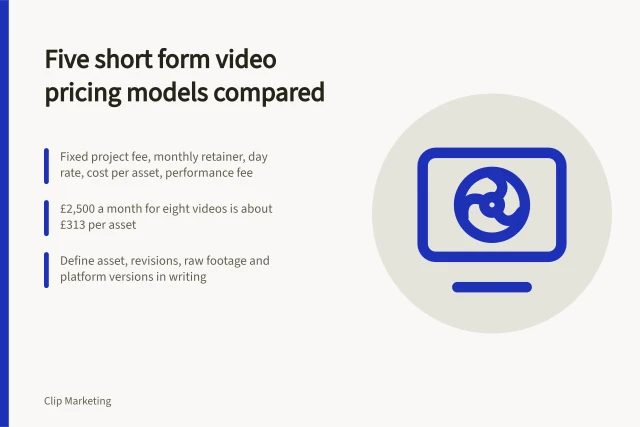
- Five short form video pricing models compared for EnglandCompare five short form video pricing models used by English teams, from retainers to performance fees, with labelled example costs and the risks each one hides.
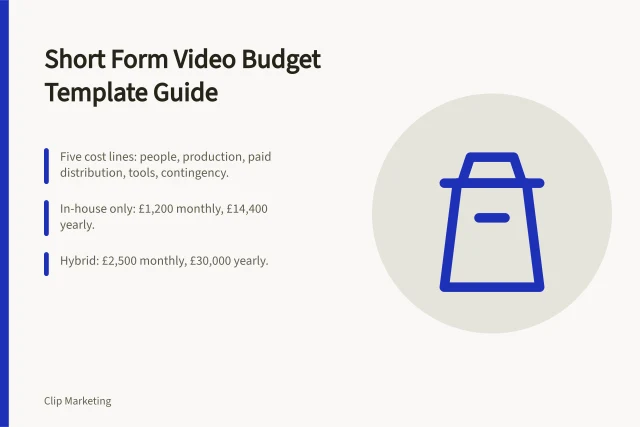
- A short form video budget template explained for marketing teamsA practical guide to building a short form video budget template, covering cost lines, a comparison table and the rules that affect spend in England.
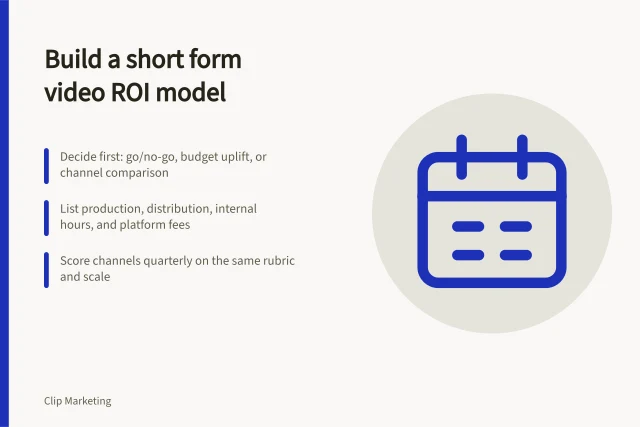
- When to build a short form video return on investment modelHow to build a short form video return on investment model in England, with cost lines, attribution windows, a scoring rubric and compliance checks.
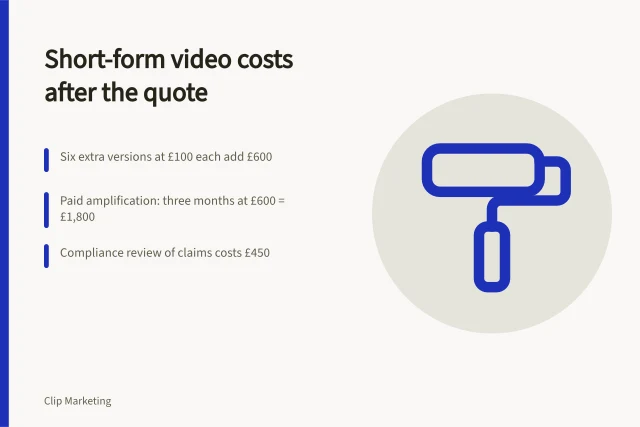
- When to add short form video hidden costs to the budgetCosts that land after the quote: versioning, paid reach, rights and compliance review, with illustrative pound figures and a before-and-after budget table.