Foundations
Part of When to build short form video foundations for the England market
Compare short form video business models before you commit
Compare the main short form video business models used by England-based teams, from retainers to licensing, with the cost, control and risk each one carries.
What to take away
- The model you pick decides who owns the footage, who carries the media budget and how quickly you can stop paying.
- Retainers buy continuity; project fees buy control; licensing buys reach without production overhead.
- Performance deals look cheapest up front and are the hardest to forecast, because fees scale with spend.
- Any model that puts ad spend on your account keeps the platform relationship in your name.
- Check the regulatory and creative-standards obligations before signing, not after the first campaign runs.
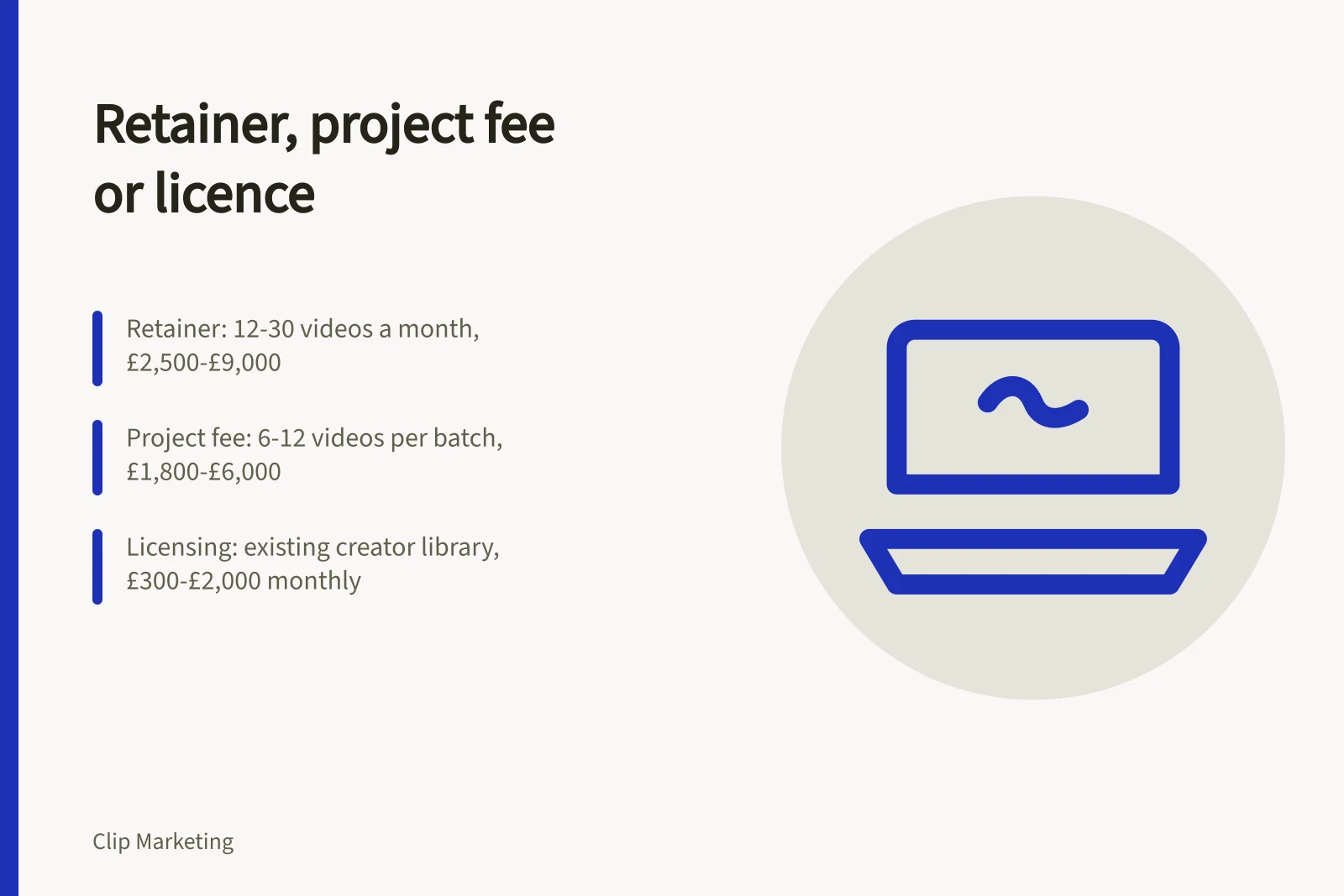
Retainer, project fee or licence
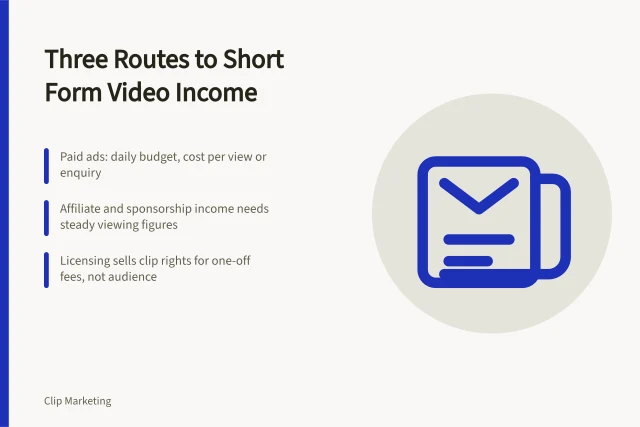
Most England-based brands choose between three structures. A monthly retainer pays an agency or freelancer for an agreed volume of vertical video each month. A project fee covers a fixed batch with a defined scope. A licensing deal lets you use existing creator footage for a set period.
Retainers suit teams that publish continuously and need a predictable pipeline. Project fees suit launches, seasonal pushes and one-off campaigns. Licensing suits brands testing a channel before hiring.
Control sits in different places. With a retainer, the supplier usually holds the raw files and edit project. With a project fee, you can ask for source files on delivery. With licensing, you rarely get the master files at all.
What each model costs
Costs vary by volume, shoot complexity and talent. Use these as illustrative examples only, not market rates.
Typical trigger
- Retainer
- 12 to 30 videos a month
- Project fee
- 6 to 12 videos per batch
- Licensing
- Existing creator library
- Performance deal
- Paid social scale-up
Cash commitment
- Retainer
- £2,500 to £9,000 a month
- Project fee
- £1,800 to £6,000 per batch
- Licensing
- £300 to £2,000 per month
- Performance deal
- Base fee plus share of spend
A team paying £400 a month for a single creator is buying a small retainer, not a licence. The distinction matters when you try to leave.
Paid amplification is a separate line. If the supplier runs ads from their own ad account, your brand loses the pixel history and audience data when the contract ends. Keep the ad account, the business manager and the pixel in your name.
For a wider view of what England-based buyers are spending across formats, the market guide for 2027 sets out the demand picture behind these figures.
Where regulatory risk sits
Advertising rules apply whoever shoots the video. The Advertising Standards Authority can act on ads in social feeds, and its published sanctions guidance sets out what happens when a campaign breaches the CAP Code, including removal requests and referral to other regulators.
The model changes who is accountable in practice. If a creator posts from their own handle under a licensing deal, disclosure of paid partnership still sits with the brand that briefed it. Put the disclosure requirement in the contract, not in a verbal brief.
Data handling also shifts with the model. Retainers often mean the supplier holds your customer lists for targeting. The Digital Markets, Competition and Consumers Act 2024 is part of the legislative context that continues to shape UK data protection rules affecting marketing data, so agree in writing who is the controller and who is the processor.
Choosing on evidence, not on price
Ask three questions before you compare quotes. Who owns the raw footage? Whose ad account runs the spend? What notice period applies?
Retainer or project fee?
Is your audience already watching vertical video?
retainer compounds
project fee is cheaper test
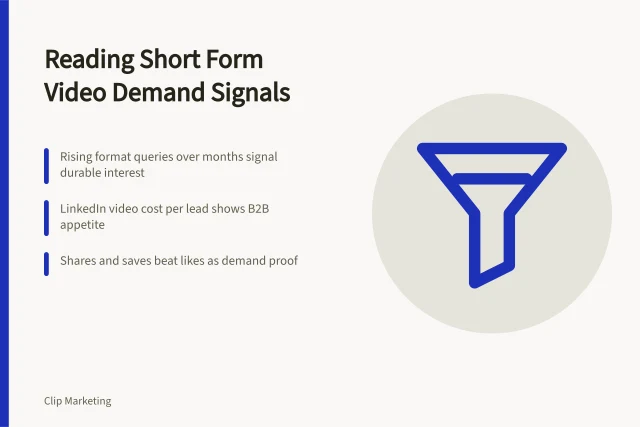
Then look at demand. If your audience is already watching vertical video, a retainer compounds. If you are still testing whether the format works for your category, a project fee is the cheaper way to find out. The demand signals in England show which categories are pulling volume and which are still thin.
Creative quality is the other variable. The IAB UK's introduction to creative best practice covers the conventions that make digital ad creative work, which is useful when you are briefing a supplier who normally shoots long-form.
Glossary
- Retainerrecurring fee for an agreed monthly output.
- Project feefixed price for a defined batch of videos.
- Licensingright to use existing footage for a set term.
- Performance deallower base fee plus a share of media spend.
- Whitelistingrunning ads from a creator's handle with their permission.
Common questions
Can I switch models mid-contract?
Usually yes, but only at a notice point agreed in writing. Moving from retainer to project fee often means renegotiating the rate card, because the supplier loses guaranteed volume.
Who owns the footage in a licensing deal?
The creator or their agency normally retains ownership, and you buy usage rights for a fixed period. Ask for the territory and channel list, because a licence for organic social rarely covers paid ads.
Do I need a written contract for a small retainer?
Yes. Even a £400 a month arrangement should state deliverables, ownership, notice period and who holds the ad account, otherwise disputes over footage and data become expensive.
Does the model affect ASA exposure?
It affects who is easiest to identify, not whether the rules apply. The brand that briefs and benefits from the ad carries responsibility for compliance.