Foundations
Part of When to build short form video foundations for the England market
Short form video commercial opportunities without the guesswork
A practical England guide to short form video commercial opportunities, covering paid ads, affiliate income, licensing fees and the consent rules behind each route.
What to take away
- A Manchester salon owner filming thirty-second clips picks between three revenue routes: paid ads, affiliate income and licensing footage.
- Paid video ads give the fastest measurable result, and Google's guidance on how to be successful with Google Ads covers the creative and targeting basics.
- Affiliate and sponsorship income depends on audience data, so the direct marketing and privacy and electronic communications rules apply before you contact anyone.
- Budget production cost against a realistic return, not follower count.
Why England businesses are looking at short form video
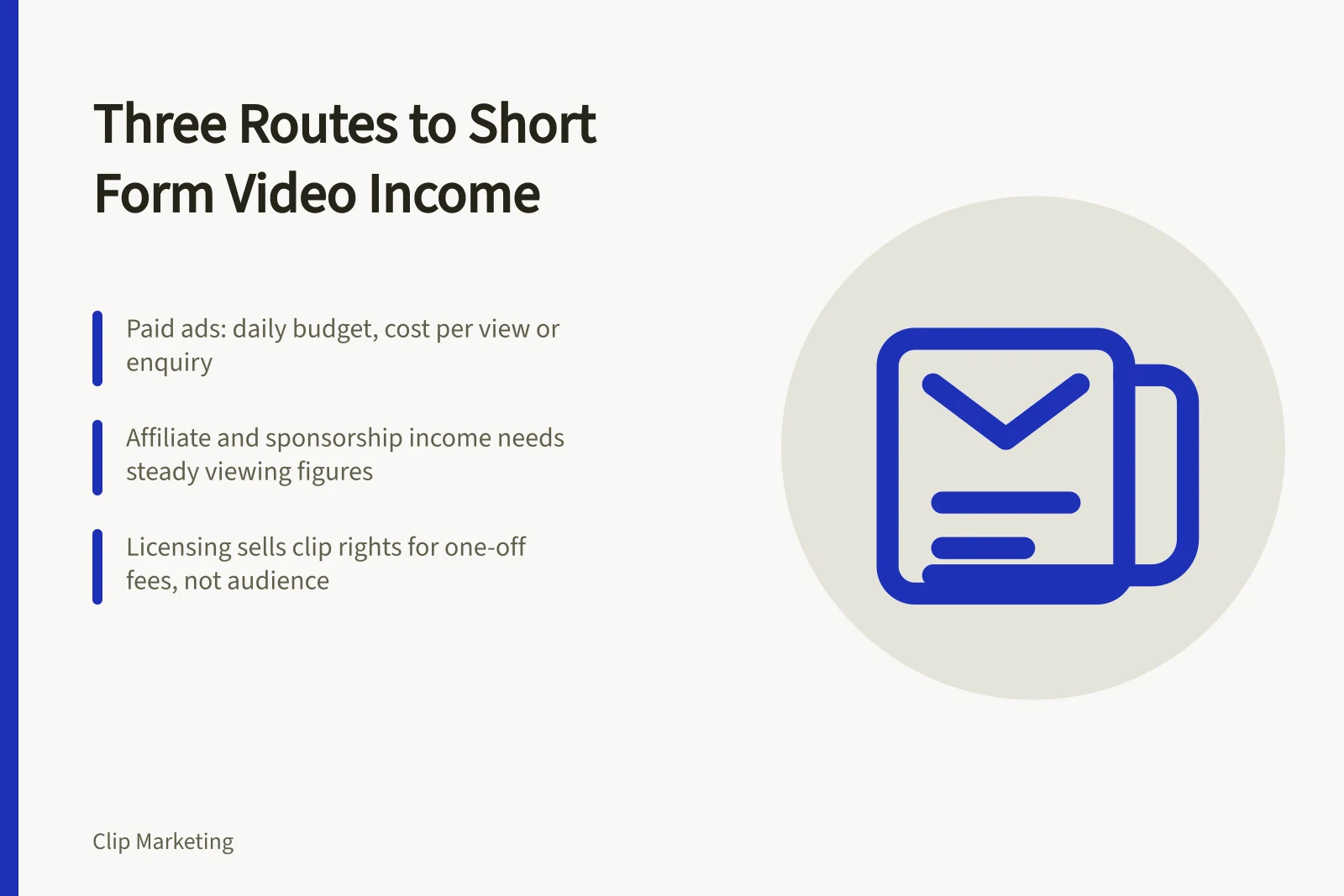
Short form video commercial opportunities fall into three buckets: advertising you pay for, income an audience earns you, and licensing footage.
The England market is crowded. A local firm competes for attention with national brands, and vertical video slot prices have risen as more advertisers move in. Choosing a route matters more than perfecting any single clip. Our short form video England market guide sets out the wider scope before you commit.
Paid video advertising as a commercial route
Paid ads draw the clearest line between spend and result. You set a daily budget, the platform delivers the clip, and you read cost per view or cost per enquiry. Google's guidance recommends testing creative variants and letting the data pick the winner.
Leeds paid test: £1,000 outlay
- £600media spend
- £250freelance editor, six cuts
- £150landing page update
- £1,000total outlay
For a small England firm this is often the only route that returns a number within a month. The clip matters less than the offer behind it.
What a modest paid test costs
The figures below are illustrative, not benchmarks.
A Leeds home-improvement firm runs a four-week test. It spends £600 on media, pays a freelance editor £250 for six vertical cuts, and sets aside £150 for a landing page update, so total outlay is £1,000.
The campaign returns £1,800 in booked work. At a 40% gross margin the firm keeps £720, which leaves the test roughly break-even against the £1,000 spent. The real return is the data: it now knows which clip and which audience produced enquiries.
Earning from an audience instead of paying for one
Affiliate links, sponsored posts and product placement pay you rather than the platform. They suit businesses that publish regularly and can show steady viewing figures.
Rates vary with niche, audience location and how well viewers convert. A trade audience in England can command more per thousand views than a lifestyle feed because buying intent is clearer.
This route starts slowly. Brands usually want a track record before committing budget, so early months often run unpaid.
Licensing footage and working with brands
Licensing sells the right to use your clip, not your audience. A gym might license a workout sequence to a supplement brand for a fixed fee, while stock libraries buy footage outright and pay a royalty per download.
Fees are one-off rather than recurring, which suits businesses with strong visual assets such as a bakery's slow pouring shot.
Check the licence terms. Exclusivity costs the buyer more and stops you selling the same clip elsewhere.
Consent and data rules that shape every route
All three routes touch personal data. Paid ads rely on audience targeting, and affiliate or sponsorship deals often involve email or SMS contact with viewers.
UK GDPR requires a lawful basis before you process anyone's details, as set out in Part 2, Chapter 2 of the Data Protection Act 2018. Marketing by email or text needs consent under PECR in most cases.
Our short form video demand signals in England shows where viewer interest sits, which helps you match a paid, earned or licensed route to your audience.
Choosing between the three routes
Pick one route for the next quarter, not all three. Paid ads suit firms with a clear offer and a testing budget, while affiliate and sponsorship work better for publishers with an existing following. Licensing suits anyone with distinctive footage and no wish to manage an audience.
Track one number per route: cost per enquiry for ads, revenue per thousand views for affiliate work, fee per clip for licensing. Those figures show where the next pound should go.
Common questions
Do I need consent to send marketing emails about my videos?
In most cases yes. PECR requires consent for electronic marketing to individuals, with limited exceptions for existing customers, as the ICO's direct marketing guidance explains.
Can I run short form video ads without a large budget?
Yes. A small daily budget and a handful of creative variants gather useful data. Time for editing, not media spend, is usually the constraint.
Is licensing footage more reliable than affiliate income?
Licensing pays a fixed fee once, so the amount is predictable. Affiliate income can grow but varies month to month. Neither is guaranteed.