Measurement
Part of A method for measuring and reporting short form video performance that avoids vanity metrics
Short form video measurement mistakes that flatter or that inform decisions
Short form video measurement mistakes in England, plus the criteria to apply when you build a report that stands up to finance and compliance review.
What to take away
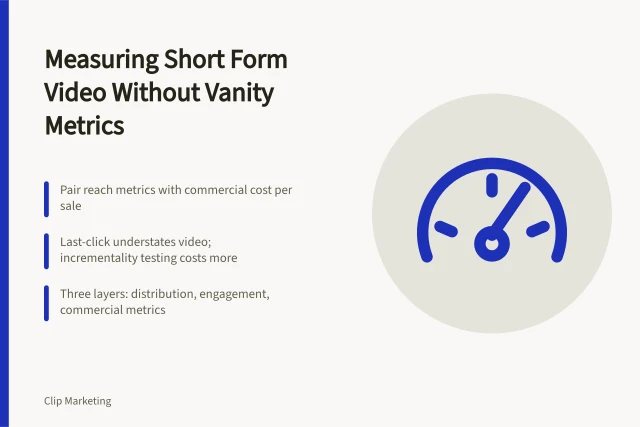
A Manchester ecommerce team spending £3,000 a month on vertical video can usually say how many views it bought, rarely how many orders it earned. That gap is the mistake this list is built around.
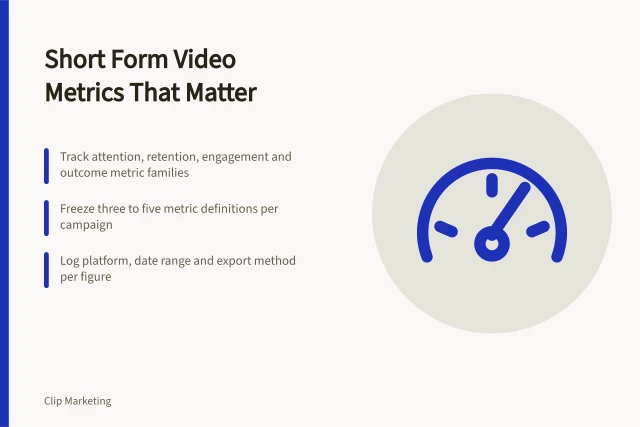
- Choose one commercial outcome per campaign before any spend, and write it down with a date.
- Keep platform figures in a separate column from your own order or enquiry data.
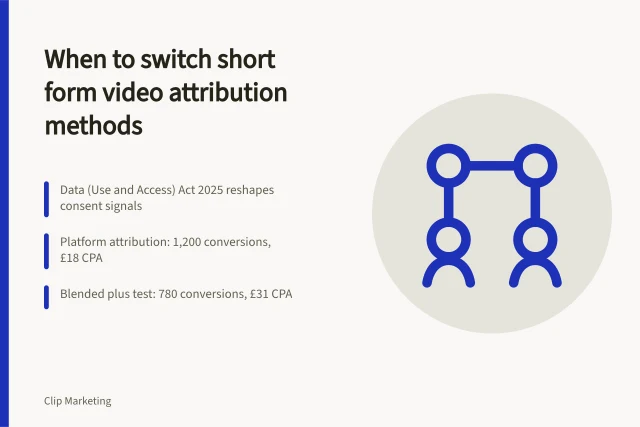
- Fix the attribution window and leave it alone for at least a quarter.
- Record the geography of every source, since England-only rules sit inside a wider UK framework.
- Set the review date before the first video goes live.
Criteria and geography: these items suit teams and agencies producing or buying short form video for audiences in England, across paid and organic work. They do not rank suppliers, and none comes from product testing. Where a rule covers the whole UK, that is noted.
1. Are you counting views as if they were customers?
Views describe how a platform delivered a video. They do not describe what a buyer did next. Thresholds for a view vary by platform and change with little notice, so totals from two channels are not like-for-like.
Platform views vs checkout orders
Platform-reported
- Views
- Platform-defined
- Conversions
- Platform-reported
- Spend
- £2,000 monthly
- Agreement
- May differ
Checkout data
- Views
- Not a person
- Conversions
- Assisted orders
- Spend
- £2,000 monthly
- Agreement
- Source of truth
Put your outcome beside it: a Leeds retailer paying £2,000 a month for video can compare assisted orders in its checkout data with platform-reported conversions in the same table. If the columns never agree, definitions are the problem, not creative.
Defining each measure first is the work covered in the short form video measurement and reporting guide. It sets out a reporting structure you can copy.
2. Do your metrics survive a platform update?
Platform dashboards rename, merge and retire metrics, so a report built on one exported column breaks quietly. Keep the raw export as well as the published summary.
Keep reports alive through platform updates
- Keep the raw export
- Keep the published summary
- Version definitions with a date
- Note what changed
- Explain the series to finance
Version your definitions with a date and a note on what changed. If a metric disappears, you can still explain the series to a finance lead instead of restarting it.
3. Are you reporting spend without a denominator?
A single cost per result across several channels hides where the money went. Split spend by placement and give each its own denominator: a thousand impressions, a completed view or a booked call.
Smaller advertisers buying video through the LinkedIn small business advertising options see delivery metrics reported inside the platform. Plan a separate denominator for that placement rather than blending it into an average.
For YouTube placements, Google's guide to Google Ads sets out the campaign types and the metrics attached to each. That helps when you export and label them.
4. Do you treat compliance as someone else's problem?
Measurement and compliance meet when you report a claim. Advertising claims in the UK are judged against the CAP Code. Any brand also running broadcast or on-demand services sits under media regulation grounded in the Communications Act 2003.
Agree who signs off claims in England before a video is scripted, not after it runs. Note in your report which claims were substantiated and by whom.
5. Do you review on a fixed schedule?
Ad hoc reviews produce arguments about anecdotes. A monthly review with a fixed agenda is easier to defend. Put traffic, leads and revenue in that order, and leave creative debate to a separate meeting.
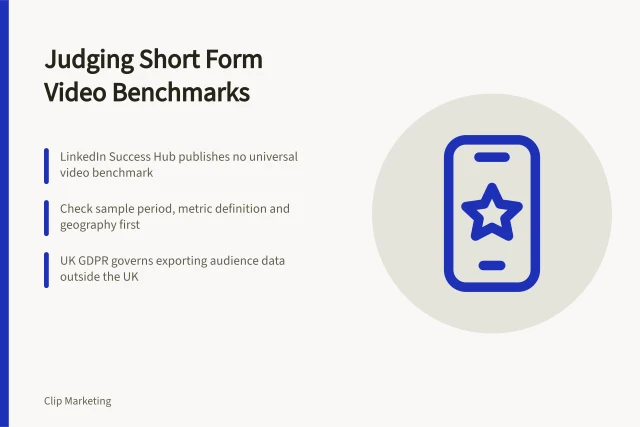
Benchmarks belong in the same conversation. Published figures for English campaigns differ by sector and format. The short form video benchmark research in England explains how to place your numbers against a comparable set.
Glossary
- View
- a platform-defined event, not a person, and not a customer.
- Attribution window
- the period in which a conversion is credited to an exposure.
- Denominator
- the unit you divide spend by to get a cost.
- Blended cost
- total spend divided by total results, which hides channel differences.
Common questions
How many metrics belong in a monthly report?
Five or six. One commercial outcome, two delivery metrics and one cost figure per channel is enough, with detail in an appendix.
Weekly or monthly reporting?
Monthly for decisions, weekly for fast fixes such as a campaign spending without delivering. Keep the same definitions across both cycles.
What if platform data and our own data disagree?
Expect it. Platforms credit conversions on their own rules. Report both, label them, and treat your own system as the commercial record.
Do we need a control group?
Not always. If you cannot hold spend back, compare matched periods and say plainly that the comparison is not a controlled test.