Rules and ethics
Part of Check UK ad disclosure and consent before approving short form video
Short form video disclosure policy explained for England
A practical how-to for English marketing teams on building a short form video disclosure policy, covering advertising rules, consumer law and programmatic buying.
What to take away
A short form video disclosure policy is a written set of internal rules. It tells everyone creating or buying vertical video how to label paid, gifted or affiliate content before publication. In England, the Advertising Standards Authority enforces the CAP Code, which requires ads to be obviously identifiable. Consumer law adds its own duties.
A policy needs a scope, a label format, an approval step and a review date. It should also cover programmatic placement, where your ad may sit beside content you did not choose. This guide is general guidance only; individual cases need a qualified adviser.
Start with the legal duties that apply in England
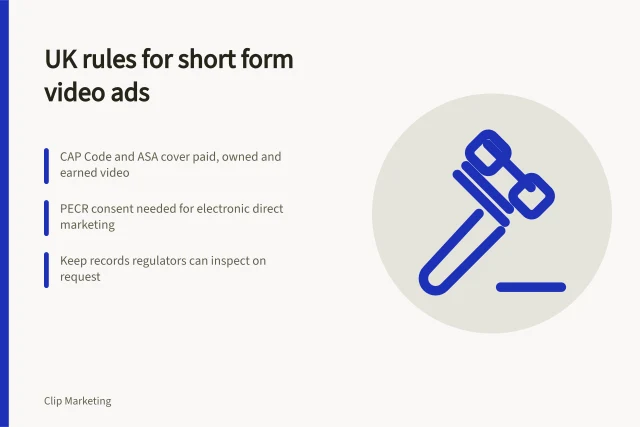
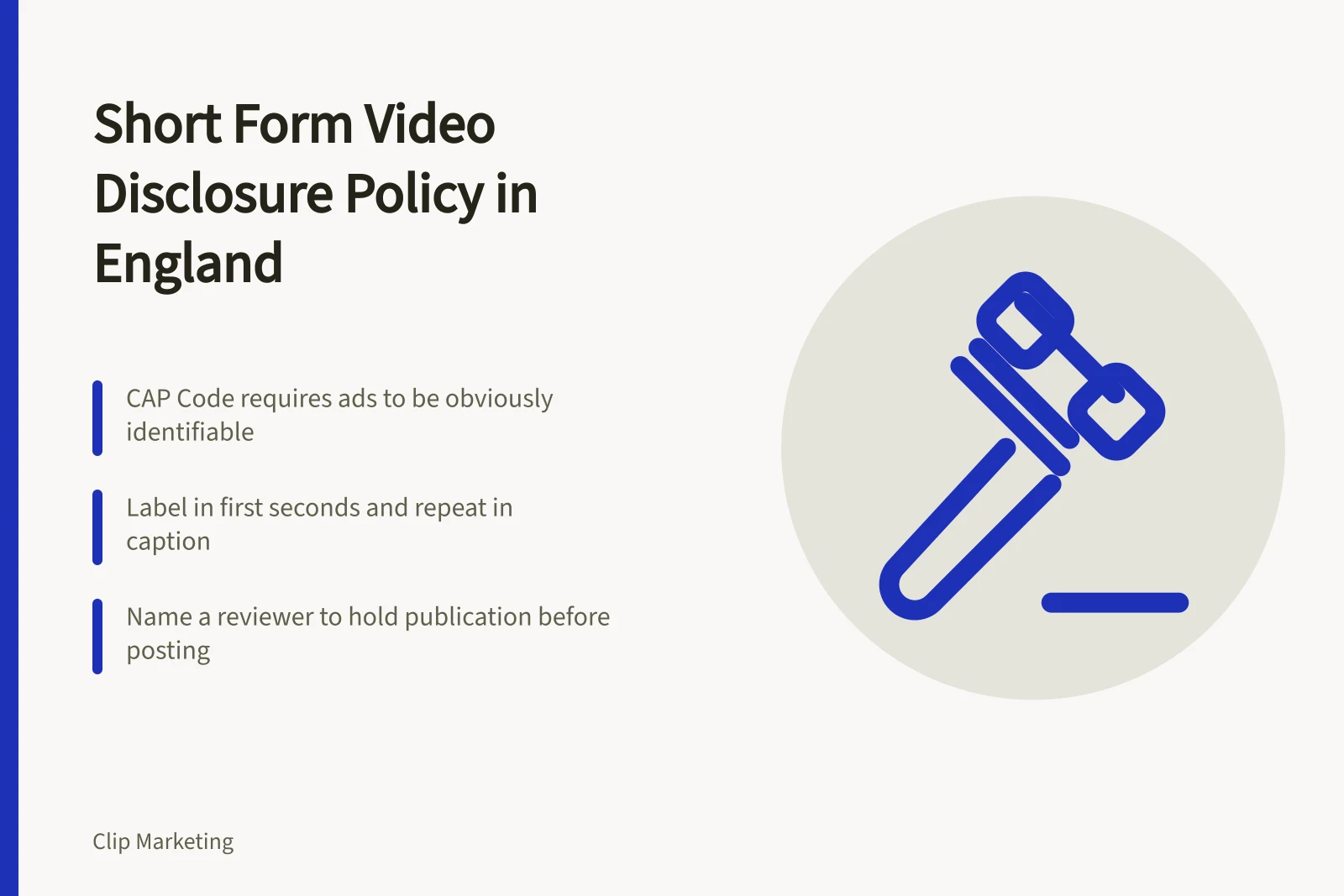
England is covered by the CAP Code, administered by the Advertising Standards Authority. The Code requires marketing communications to be obviously identifiable as such. That applies to a paid partnership on a vertical video platform just as it applies to a television spot.
Consumer protection law sits alongside the Code. The Competition and Markets Authority expects businesses to be transparent about paid promotions. The guidance for businesses from GOV.UK explains how consumer law applies to marketing, including the risk of misleading omissions.
Privacy matters too. If a video features a member of the public, a staff member or a customer, you need a lawful basis for using their image. The Human Rights Act 1998 sets out the right to respect for private life, which is the backdrop to any consent decision.
If you need the wider compliance picture before drafting a policy, read our short form video UK rules and compliance guide for 2027. It maps the regulators and the main risk areas.
Decide what the policy covers
A policy that only covers influencer posts will miss most of your output. Set the scope wide enough to catch every format your team publishes or pays for.
Cover organic posts that mention a product, even without payment. Cover paid partnerships, affiliate links, gifted products and employee advocacy. Cover paid media, including programmatic buying, because a short-form video ad can be placed automatically across many apps and sites.
The Back to Basics Guide to Programmatic from IAB UK is useful here. It explains how automated buying places video inventory, which helps you write a policy that covers placement as well as creative.
Set the label format and placement
Disclosure must be clear before a viewer engages, not buried after a tap. Put the label in the first seconds of the video and repeat it in the caption.
Disclosure policy minimum positions
Element
- Label wording
- Plain words: Ad
- Label timing
- First two seconds
- Gifted content
- State item was free
- Affiliate links
- State commission earned
- Programmatic ads
- Confirm placement controls
Minimum policy position
- Label wording
- Creator and brand
- Label timing
- Editor before publish
- Gifted content
- Campaign manager
- Affiliate links
- Legal or compliance
- Programmatic ads
- Media buyer
Who checks it
- Label wording
- Label timing
- Gifted content
- Affiliate links
- Programmatic ads
Use plain words such as "Ad", "Paid partnership" or "Gifted". Avoid vague tags that a viewer would not recognise. Keep the label visible in the safe area so platform interface elements do not cover it.
For affiliate content, state that you earn a commission. For gifted items, state that the item was free. If the brand paid for the post, say so in the caption even when the platform's own tool adds a tag.
Comparison table
Minimum policy position
- Label wording
- Plain words such as Ad or Paid partnership
- Label timing
- Within first two seconds and in caption
- Gifted content
- State item was free
- Affiliate links
- State commission is earned
- Programmatic ads
- Confirm placement controls
Who checks it
- Label wording
- Creator and brand reviewer
- Label timing
- Editor before publish
- Gifted content
- Campaign manager
- Affiliate links
- Legal or compliance lead
- Programmatic ads
- Media buyer
Build the approval workflow
A policy only works if someone applies it. Name a reviewer for each campaign and give them authority to hold publication.
Disclosure approval workflow
- Name a reviewer for each campaign
- Give reviewer authority to hold publication
- Run disclosure check before first post
- Record what was checked, by whom, when
- Agree placement controls with media buyer
- Review excluded placements when campaign changes
Require a disclosure check before the first post goes live. Keep a simple record of what was checked, by whom and when. That record is your evidence if a complaint arrives.
For paid media, agree placement controls with your buyer. Ask for a list of excluded placements and confirm who reviews it. Review the list when the campaign changes.
If your team is new to the rules, our explainer on short form video UK regulations in England sets out the regulators and what they expect.
Train creators and review the policy
Run a short briefing for anyone who posts on behalf of the brand. Cover label wording, timing and the approval step. Give them a one-page summary they can keep.
Review the policy at least once a year, or sooner if a platform changes its tools. Note the review date in the document so it does not drift.
Keep a log of complaints and near misses. Use it to tighten the wording next time. This is general guidance only; individual cases need a qualified adviser.
Common questions
Does a paid partnership need a label in England?
Yes. The CAP Code requires marketing communications to be obviously identifiable, so a paid partnership on a short-form video platform needs a clear label. Put it where a viewer sees it before engaging.
Is a gifted product an ad under the CAP Code?
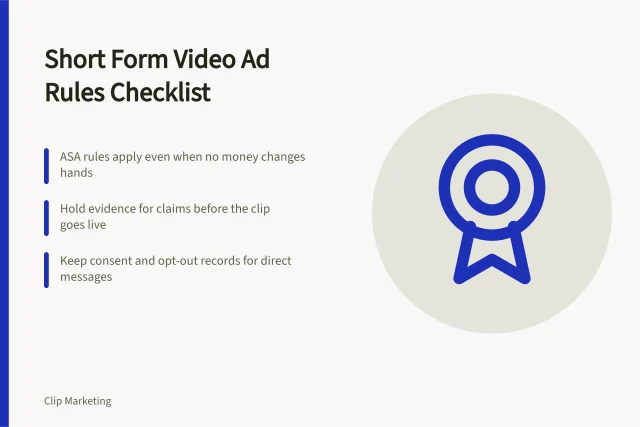
It can be. If the brand controlled the content, or the creator received payment or a free item in exchange for coverage, treat it as advertising and label it. When in doubt, disclose.
Who enforces disclosure rules for short form video?
The Advertising Standards Authority enforces the CAP Code, and the Competition and Markets Authority can act on misleading commercial practices. Platform rules add a further layer.
How often should we update the policy?
Review it at least annually and after any significant platform or regulatory change. Record the review date and the person responsible in the document itself.