Strategy
Part of What should a short form video strategy for 2027 include?
Comparing a short form video channel strategy without spreading your team thin
Compare short form video channel strategy options for small UK teams, from single-channel focus to two-channel partnerships, with illustrative costs and rules.
What to take away
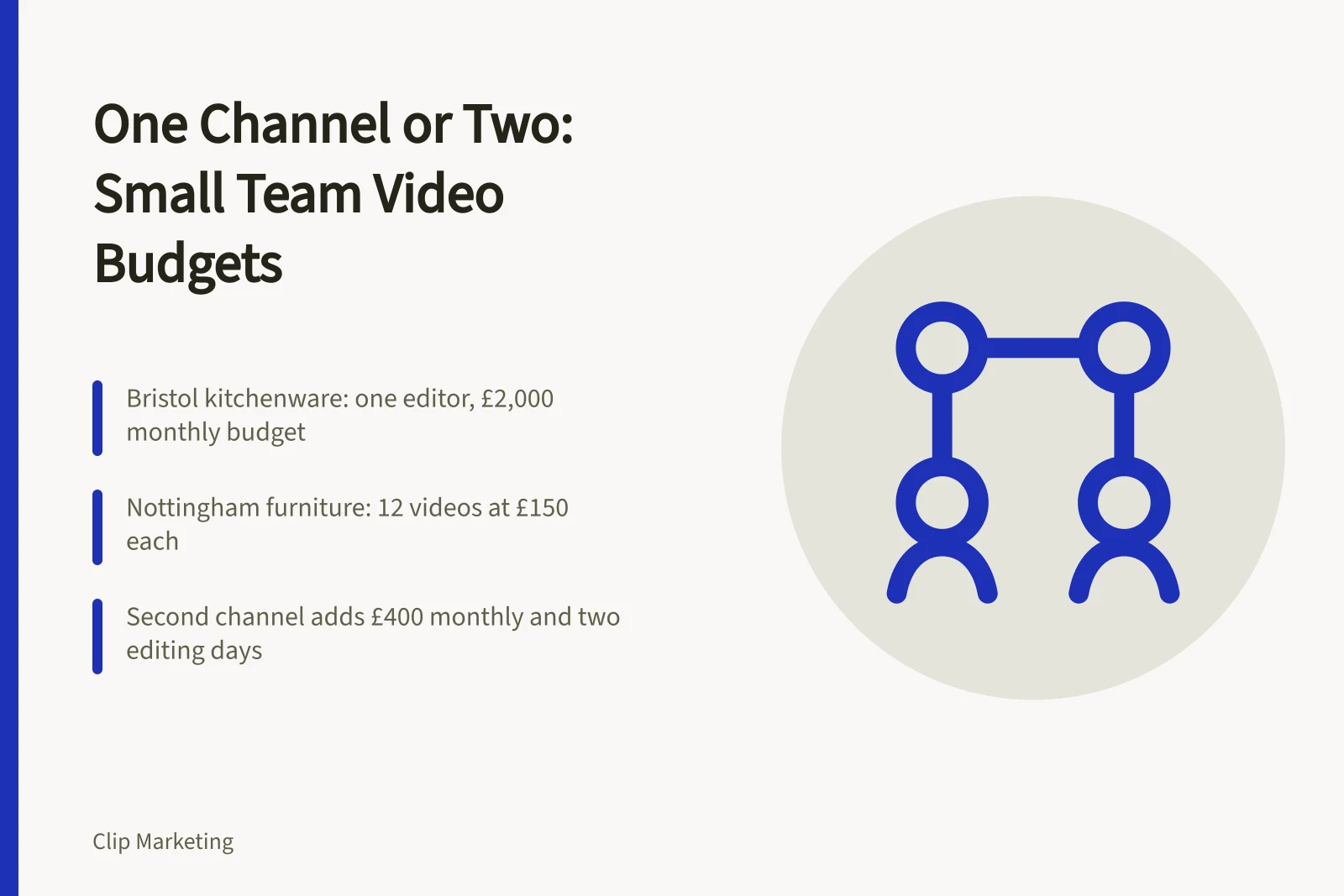
- A Bristol kitchenware brand with one editor and a £2,000 monthly budget gets further on one channel posted three times a week than on four posted once.
- Compare channels on the cost of a finished video, not on follower counts you cannot control.
- Test any second platform for a full quarter before you move budget to it.
- Reuse one core edit everywhere and change only the opening three seconds and the caption.
- Record consent and footage ownership from day one, because UK data protection law covers customer clips.
Decide what each channel is for before you compare reach
Channel choice is a resourcing decision, not a taste decision. A platform you can feed every week beats a bigger platform you post to monthly.
Most small teams in England run one editor and a part-time marketer. That pair can finish eight to twelve vertical videos a month to a decent standard.
The real comparison is not TikTok against Reels against Shorts. It is how many channels your current output can keep alive without quality slipping. The short form video strategy and planning guide for 2027 shows how to turn an output figure into an objective you can measure each month.
Three channel strategies side by side
Three shapes cover most small UK teams. Each trades reach against effort differently.
Three channel strategies compared
One channel
- Videos a month
- 12
- Monthly cost
- £1,600
- Main risk
- One platform
Flagship plus support
- Videos a month
- 16
- Monthly cost
- £2,100
- Main risk
- Lookalike edits
Three channels
- Videos a month
- 24
- Monthly cost
- £3,400
- Main risk
- Quality slips
One channel, posted three or four times a week
Everything goes into a single feed. The editor learns one format, one caption style and one comment stream. Learning is fast because every experiment lands in the same place. The exposure is just as simple: one algorithm change can remove most of your reach.
Two channels, one flagship and one support
The flagship channel gets the full edit and the strongest hook. The support channel gets a shorter cut, a different opening frame and its own captions. Cost rises by roughly a fifth rather than double, because the filming session is shared.
A third shape, three or more active channels, only works when a named person owns each feed.
Figures below are illustrative examples, not benchmarks.
Videos a month
- One channel
- 12
- Flagship plus support
- 16
- Three channels
- 24
Illustrative monthly cost
- One channel
- £1,600
- Flagship plus support
- £2,100
- Three channels
- £3,400
Main risk
- One channel
- Dependency on one platform
- Flagship plus support
- Lookalike edits
- Three channels
- Quality and captions slip
What the numbers look like for a small England team
Take a Nottingham furniture retailer with one in-house editor and a content budget of £2,000 a month. A freelance editor charges £150 for each finished vertical video. Twelve videos cost £1,800, leaving £200 for paid promotion.
Second channel monthly cost test
- £2,000Retailer monthly budget
- £150Freelance editor per video
- £400Extra monthly cost for second channel
- 2Extra editing days per month
Add a second channel and the same retailer needs sixteen videos. At £150 each that is £2,400, so the second channel costs £400 more every month and roughly two extra editing days.
That £400 is the figure to test. If the second feed cannot pay it back in extra enquiries each month, the flagship channel deserves the money.
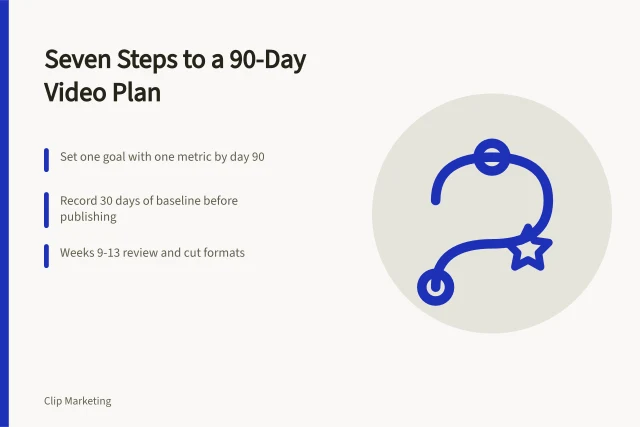
Run the short form video ninety day plan in England first, because it sequences filming, posting and review into one cycle you can repeat.
Rules and data duties that shape channel choice
Hiring is part of the comparison. Before you choose between a freelance editor and a production company, check who owns the company you are paying. The Small Business, Enterprise and Employment Act 2015 introduced the register of people with significant control, which is why that check now takes minutes.
Customer clips are personal data. The ICO's UK GDPR guidance and resources explain what you must tell people, how long you may keep their footage and how to answer a request to delete it.
Paid placements pull platform and advertising policy into the decision. The IAB UK policy positions on digital advertising track how UK rules are moving, which helps when you split spend across two channels.
Common questions
How many channels should a small team run?
Two is the usual ceiling for one editor. Move to three only when a named person owns each feed and can post on schedule.
Can I post the same video on every platform?
The core edit travels, but change the opening frame and the caption. Export from the original file instead of reposting a download from another app.
What should I hold back for a second channel?
Budget about a fifth more than your single-channel cost, not double. The filming session is shared, so only editing and captioning grow.
How long before I judge a channel?
One quarter, reviewed weekly against the objective you set at the start. Judging a feed after a fortnight tells you about your own posting routine, not the channel.