Operations
Part of What stronger short form video operations mean for UK marketing teams
Short form video quality checklist explained for English teams
A short form video quality checklist for English teams: framing, sound-off viewing, disclosure, privacy and the sign-off records that keep reviews auditable.
What to take away
A short form video quality checklist is a written set of pass or fail tests a video must clear before it is published on a vertical feed.
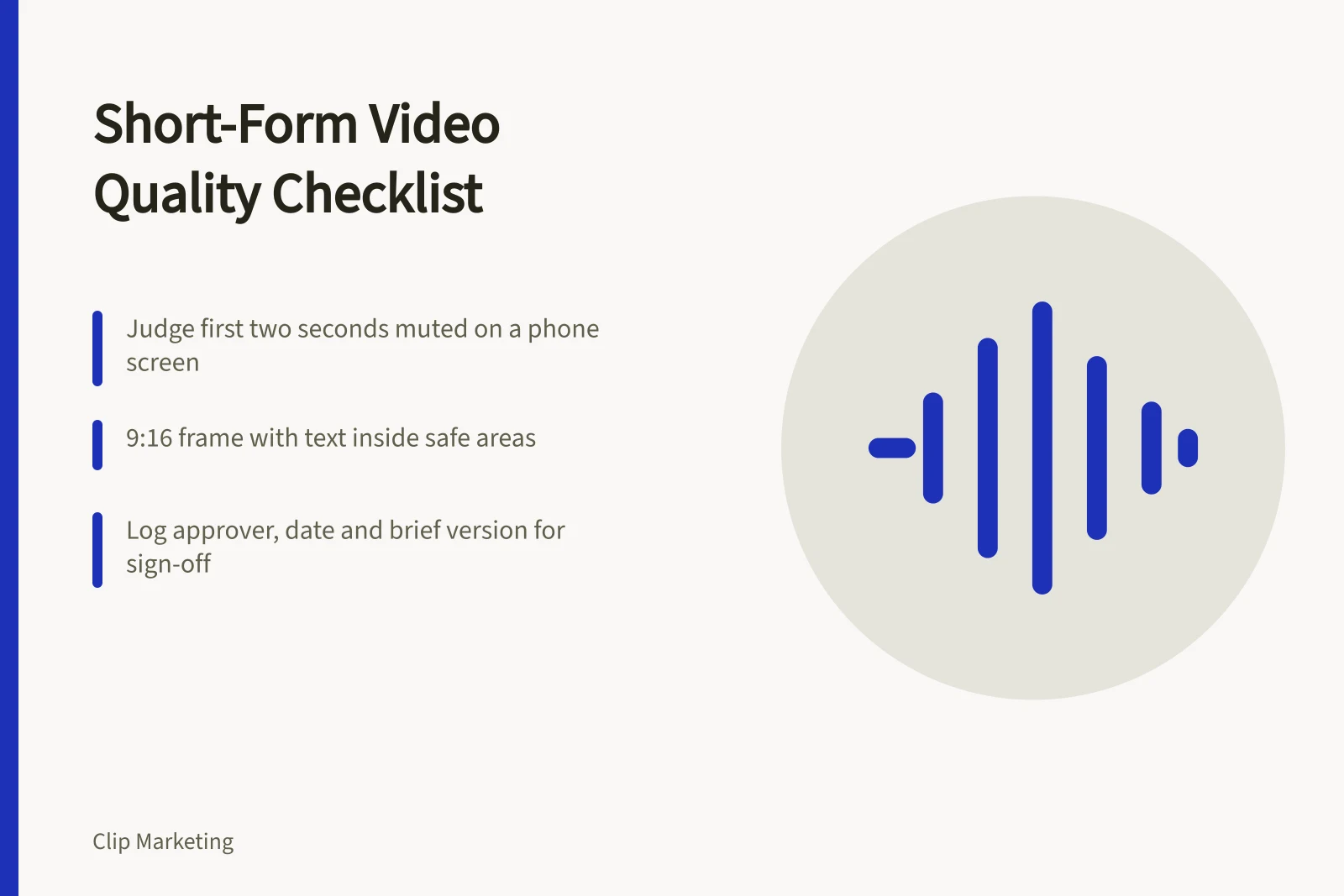
- Judge the first two seconds on a muted phone screen, not a desktop monitor.
- Check the file against the platform's current specification sheet before upload.
- Record who approved the video, when, and against which version of the brief.
- Treat privacy, consent and advertising disclosure as release gates.
- Keep the checklist short enough that a busy editor will use it.
The working detail behind these tests sits in the short form video operations and delivery guide, which sets out how the wider delivery process fits together.
Frame and format checks
Start with the frame. Most vertical feeds expect a 9:16 picture, so a video shot for a horizontal edit will lose its edges when cropped. Check safe areas for captions and on-screen text, because interface elements sit over the lower part of the picture.
Vertical vs horizontal frame
9:16 vertical
- Feed fit
- Full frame
- Safe area
- Text inside
- Captions
- Clear of UI
16:9 horizontal
- Feed fit
- Cropped edges
- Safe area
- Text at risk
- Captions
- Covered by UI
Then check the file. Resolution, frame rate, aspect ratio and file size all have published limits that change, so date your checklist and review it each quarter against Google's announcements about video ad formats, which show how often specifications move.
Preview players are forgiving, but the upload is not, so check the export settings rather than trusting the preview window.
Sound-off viewing
Most feed viewing happens with sound off, at least at first. Watch the edit with the volume muted and ask whether the point lands without audio. Read the opening frame as a still image. If a viewer cannot tell what the video is about from that frame alone, the hook needs work.
Sound-off viewing checks
- Watch edit with volume muted
- Point lands without audio
- Opening frame readable as still
- Hook clear from first frame
- Captions burned in or checked
- Move shot, not words, off faces
Captions should be burned in or auto-generated and checked, not assumed. Where a caption sits over a face or a product, move the shot rather than the words.
Claims, disclosure and permissions
Every claim in a video needs a source you can point to. If a figure came from a client, note the date they supplied it. Keep the source list beside the edit rather than in an email thread, so a reviewer does not have to hunt for where a figure came from.
Paid partnerships need clear labelling in the video itself, not only the caption. Where a video uses a person's image or voice, confirm the consent record exists before approving the file.
The Human Rights Act 1998 is the starting point for balancing privacy and freedom of expression in law. So consent paperwork belongs in the release pack.
A comparison table for sign-off
Pass condition
- Frame
- 9:16 picture, text inside safe area
- Sound off
- Message clear with volume muted
- Captions
- Readable, checked, correctly placed
- Claims
- Each figure has a dated source
- Disclosure
- Paid partnership labelled on screen
- Consent
- Release form filed for every contributor
- File
- Meets current platform specification
Who signs
- Frame
- Editor
- Sound off
- Editor
- Captions
- Editor
- Claims
- Producer
- Disclosure
- Producer
- Consent
- Producer
- File
- Editor
Use the table as a gate, not a scorecard. A single fail sends the video back, and the version that returns is logged as a new version.
Ownership and records
Someone must own the checklist. On a small team that is usually the producer, who also owns the release pack. On a larger team, split editorial checks from legal ones so the same person is not marking their own work. Name a deputy as well, because cover for holidays and sick leave is where quality failures tend to appear.
Keep a simple log: video title, version number, date, approver, and any change made after approval. That log is what makes a review auditable months later. The short form video team roles and sources note explains how to divide those duties without creating gaps.
Common questions
How long should a quality checklist be?
Long enough to catch the failures your team actually makes, and short enough to complete in a few minutes. Seven to twelve checks is a workable range for most English marketing teams.
Does the checklist change between platforms?
Yes. Frame, duration and caption rules differ, so keep one master list and a short platform addendum. Recheck the addendum against the platform's own current guidance before each campaign.
Who should sign off a video before publication?
A named editor for craft and a named producer for claims, consent and disclosure. Both names go in the log, with the date and the version approved.
Where does advertising guidance fit in?
Official guidance for YouTube and Google video advertising is a useful reference when you write the claims and disclosure checks. Google publishes marketing resources for video advertisers that set out the formats and expectations behind those checks.